About the Barometer report
Office occupancy is a key indicator of how commercial real estate is performing, offering insight into how businesses are using their space. In many markets, Class A+ buildings have continued to attract tenants and command higher rents, even as the broader office sector adjusts to new ways of working. Kastle’s Barometer adds to this picture with proprietary, real-world occupancy data, tracking how buildings are used day to day.
How the data is tracked
Kastle’s Barometer tracks anonymized keycard, fob, and app access data from over 300,000 Kastle users across ten major cities to identify trends in how Americans are returning to the office.
Counting daily access control entries is the most reliable way to measure office return, with the largest sample size of its kind. Occupancy is measured against a pre-pandemic baseline established in early 2020, just before COVID-19 disrupted office attendance. Data is updated weekly, with monthly charts available to track trends.
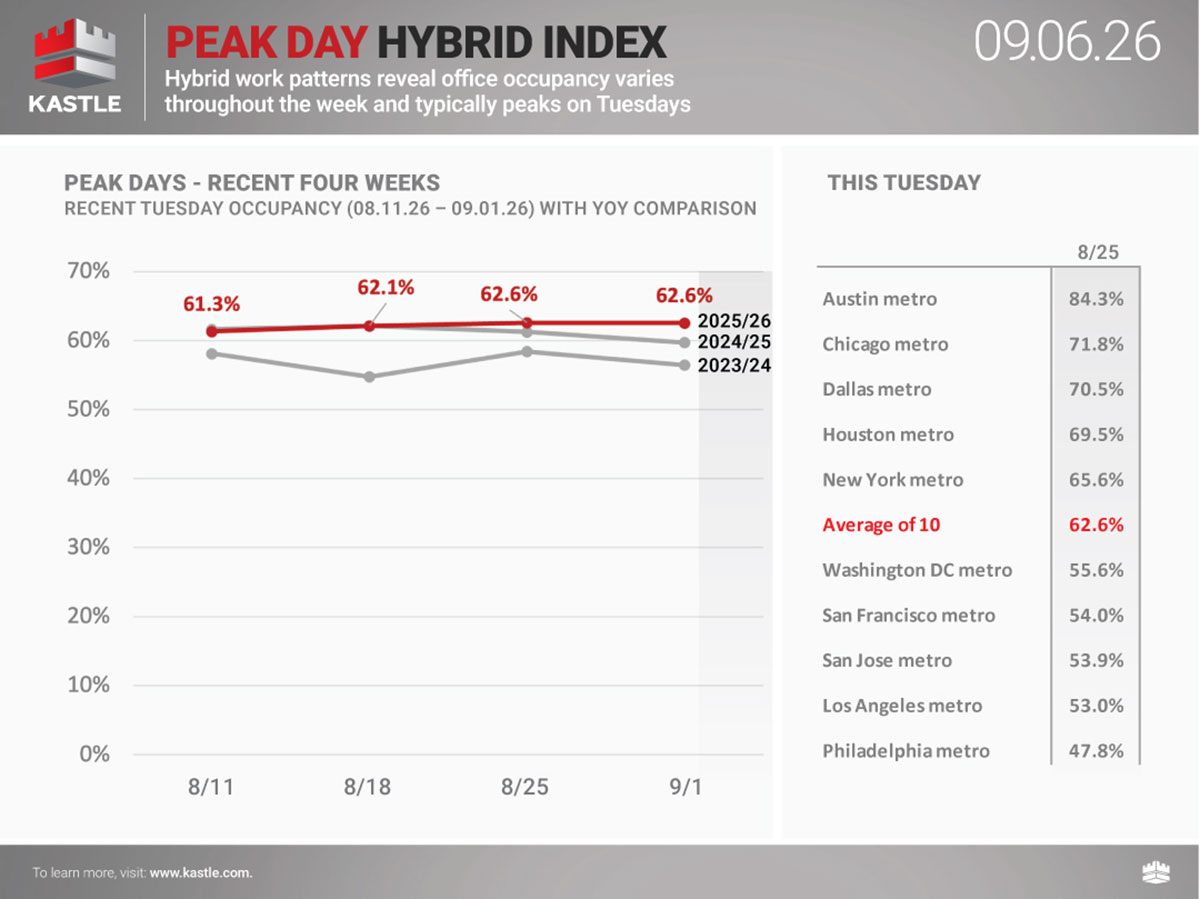
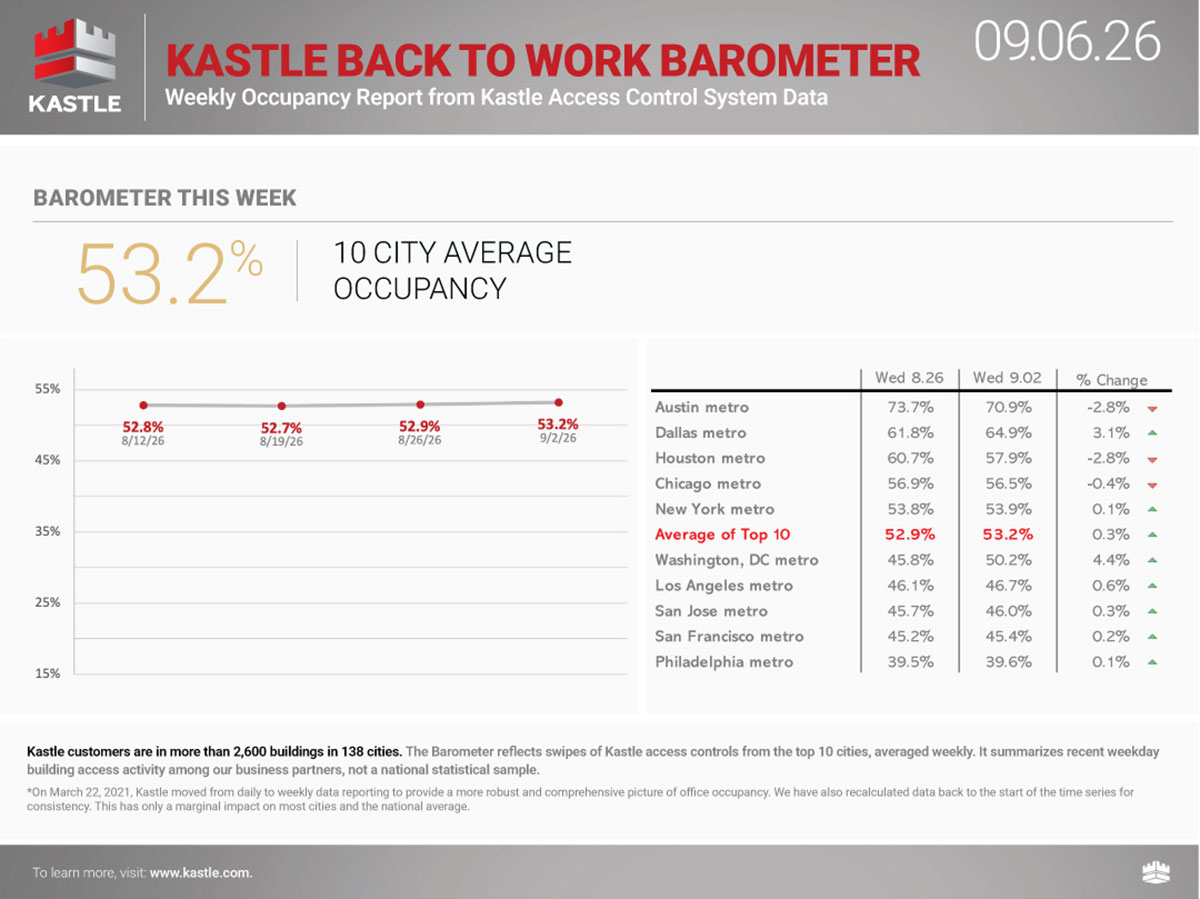
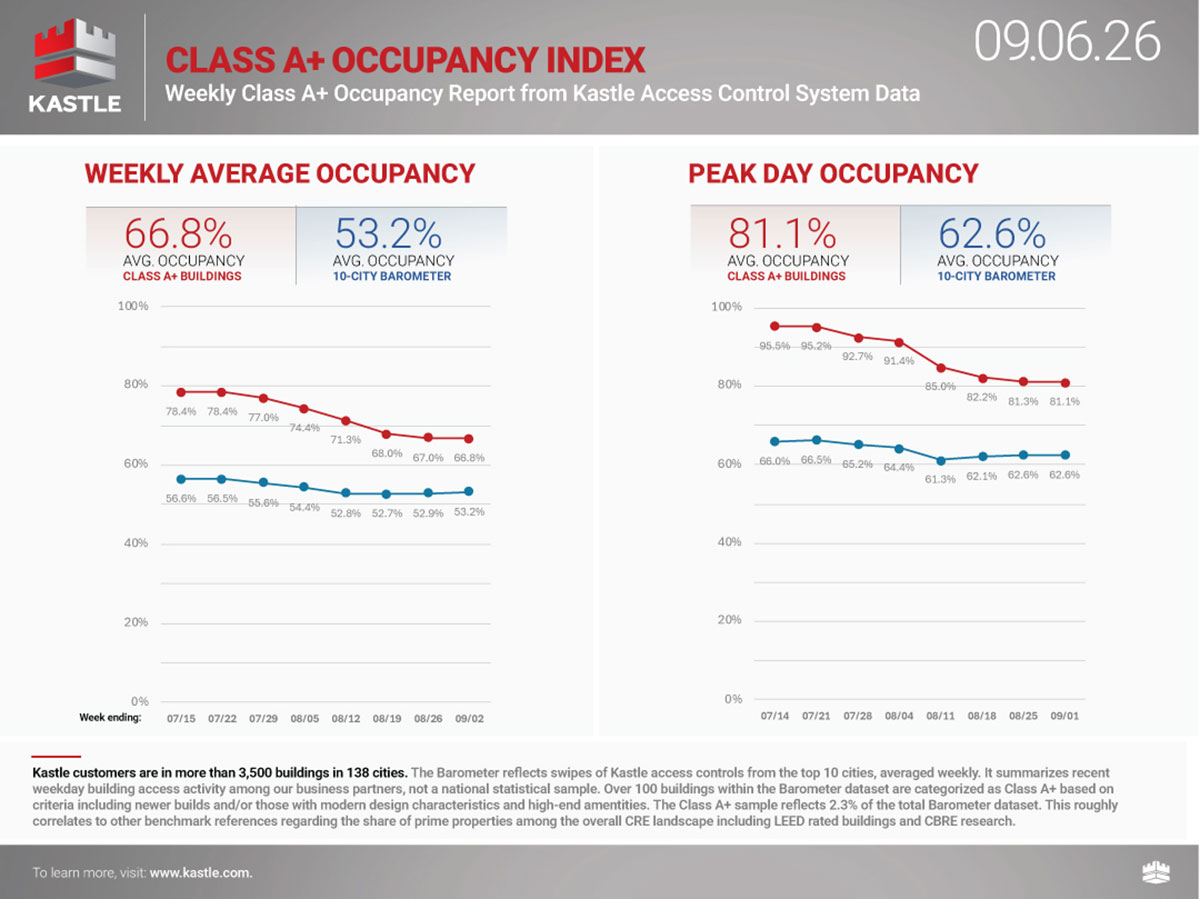
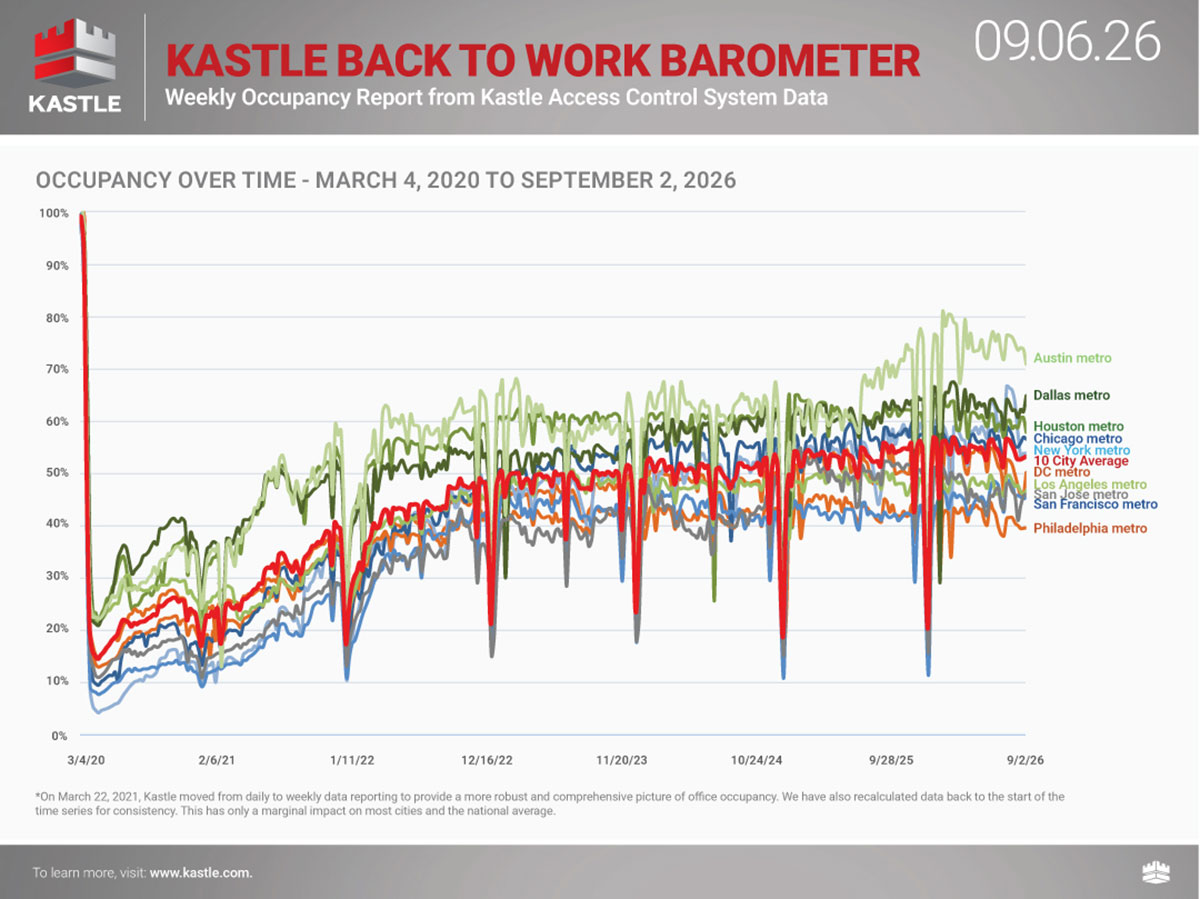
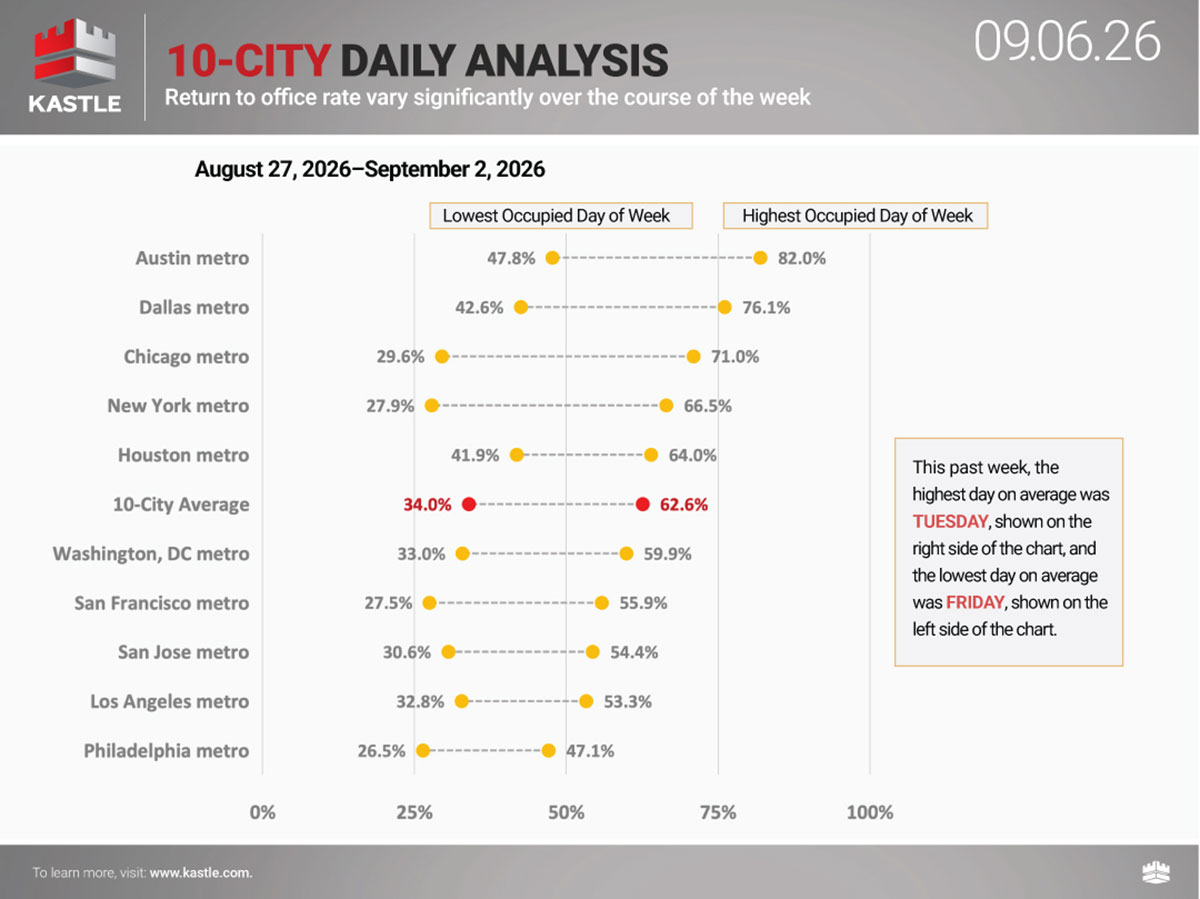
The Barometer’s weekly report summarizes access control data from our business partners in 10 major metro areas, not a national statistical sample. Charted percentages reflect the number of unique authorized user entries in each market relative to a pre-COVID-19 baseline, averaged weekly and updated every Tuesday.
Class A+ Occupancy
Class A+ occupancy pulled back after last week’s strong gain.
Peak Day
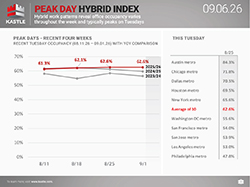
Tuesday remained the peak day nationally, though Los Angeles and Philadelphia peaked a day later.
Weekly Average
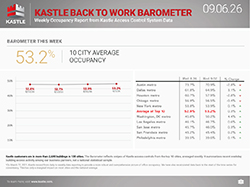
Most markets pulled back after a strong prior week, with the holiday affecting Monday’s attendance.
Barometer data science
The most reliable way to measure office return is to count people directly, and daily security card swipes provide the largest sample size for this. For several years, Kastle’s Barometer has tracked weekly office occupancy in ten major metro areas, using anonymized keycard, fob, and KastlePresence app data from over 300,000 Kastle users in those cities (out of 1.8 million Kastle users globally) across 3,400 buildings and 60,000+ businesses in 47 states.
For each cardholder, we count only their first building entry each day, avoiding overcounting from multiple swipes. These daily figures are averaged into a weekly percentage.
That percentage is compared against a pre-pandemic baseline: the average weekly first-swipe activity during a three-week window in February 2020, when office attendance was at its highest. This baseline represents 100%, reflecting normal peak occupancy rather than maximum capacity, which is why some weeks can register above 100%.
Q: What timeframe does the Barometer cover?
A: The Barometer week runs Thursday through Wednesday, and weekly reports are typically published on Tuesdays. For example: the report published on Tuesday, October 4, reflects data from Thursday, September 22, through Wednesday, September 28. Federal holidays and weekends are not included in the data.
Q: Can I get Kastle data for a city not included on the Barometer?
A: Kastle secures buildings in cities across the country. We do not publicly release office occupancy rate data for cities outside the ten Barometer markets due to sample sizes for statistical analysis. We occasionally share limited data reflecting other markets with government and nonprofit organizations and partners, but it is not intended for public consumption.
Q: What is the margin of error?
A: The Barometer relies on administrative data (card swipes). The Barometer reflects the universe of all transactions rather than a sample and therefore has no margin of error. “Margins of error” are statistical measures that derive from expected errors due to sampling processes.
Ready to make your property smarter and more secure? Connect with Kastle's experts to find the perfect solution tailored to your needs.

 Workplace Occupancy Barometer
 Legal Occupancy Barometer
 Barometer Data Science