
If you’re the office manager, the clerk or administrator at your firm, or the person everyone goes to when something isn’t working, you were handed a login, and at some point became the person responsible to new employees or temporary staff.
Security has become your problem.
A Job Nobody Asked For
In most professional offices – law firms, accounting practices, insurance agencies, medical offices – security doesn’t have a clear owner after it’s installed. It lands on whoever is most responsible: the office manager, the receptionist or both. That’s the de-facto security administrator.
What that actually means in practice: on top of their existing responsibilities, they’re now the person who handles access requests for new hires or when someone’s badge doesn’t work at 7pm, tracks down the vendor when something stops working, and figures out how to pull footage for an investigation or audit.
Each of these tasks takes time. They happen constantly; they’re unpredictable. Security issues also don’t happen during business hours. A door that won’t open, a badge that won’t work, or camera that needs to be checked, none of itwaits for Monday morning. They land on the de-facto admin on top of everything else they’re doing. And in most professional offices, time isn’t just an inconvenience to waste.
Hours Spent on Security Aren’t Spent on the Business
None of these tasks feel significant on their own. Adding a badge credential takes ten minutes. Coordinating a service call takes longer. But when you add up every request, call or change, it’s a significant drain on their time and capacity.
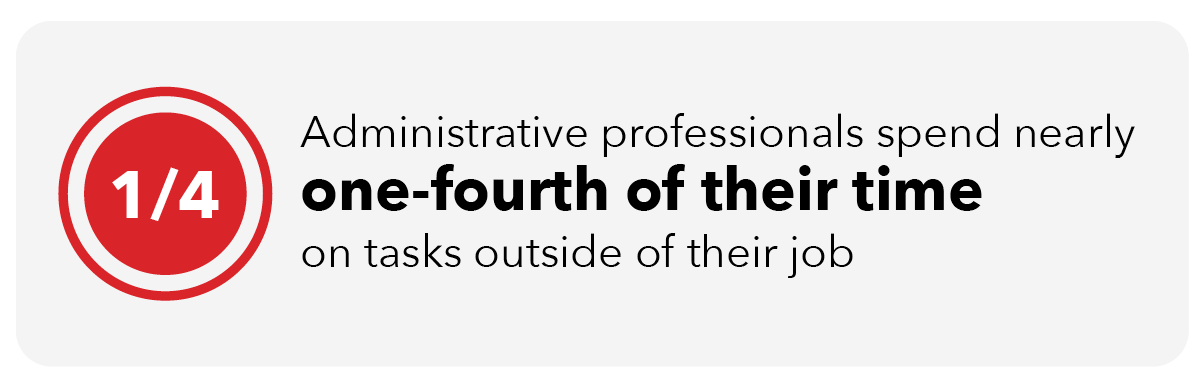
Research on administrative and office professionals finds that the average worker spends more than 552 hours per year — roughly 10 hours every single week — on tasks that fall outside their core job responsibilities.¹ Security is one of the least visible contributors to that number, which is exactly why it never gets addressed.
If your business has more than one office location, the burden compounds. Each office likely runs a different system from a different vendor — because each was installed independently. Different interfaces and different calls to make when something goes wrong. The time multiplies, and none of it is consistent.
The Cost is Time You Don’t Have
In a professional services environment, time has real value. Every hour absorbed by security administration is an hour not going toward the work your firm or business is hired to do. That’s true whether it’s an office manager keeping operations running or a paralegal pulled away from a deadline to deal with a door reader.
The cost isn’t just inconvenience. It’s capacity that’s quietly being consumed by a function that was never meant to be anyone’s responsibility, nor their area of expertise.
There’s a Better Way
As we covered in the first post in this series, a managed security partner changes this dynamic entirely. Someone whose full-time job is your security across every office, through one point of contact.
That means the late-night badge credential call goes to them. The vendor coordination, the access requests, and the badge credential cleanup is handled. When something isn’t working, they know before you do. When a new hire joins or someone leaves, there’s a process that doesn’t depend on someone remembering to do it.
For someone currently absorbing all of this on top of their actual job, that’s not a small thing, and shouldn’t be part of their job.
The Question Worth Asking
If a managing partner or practice owner asked today for a current list of everyone with active building access, including former employees, contractors, and vendors, how long would it take to produce one? Would it even be accurate?
If the honest answer is “I’m not sure,” you’ve identified the problem.
Want to learn more? Find out what the administrative burden of unmanaged security actually costs a multi-office professional services business — and what changes when security is someone’s actual job.
Next: Blog 3 — Why Your Security System Gets More Expensive Every Year. The cost for your security system is larger than you budgeted for, and it arrives at the worst possible time.
Sources
¹ APQC, Survey Finds One-Quarter of Knowledge Workers’ Time Lost Due to Inefficiencies.