
How perimeter security protects commercial sites before a breach
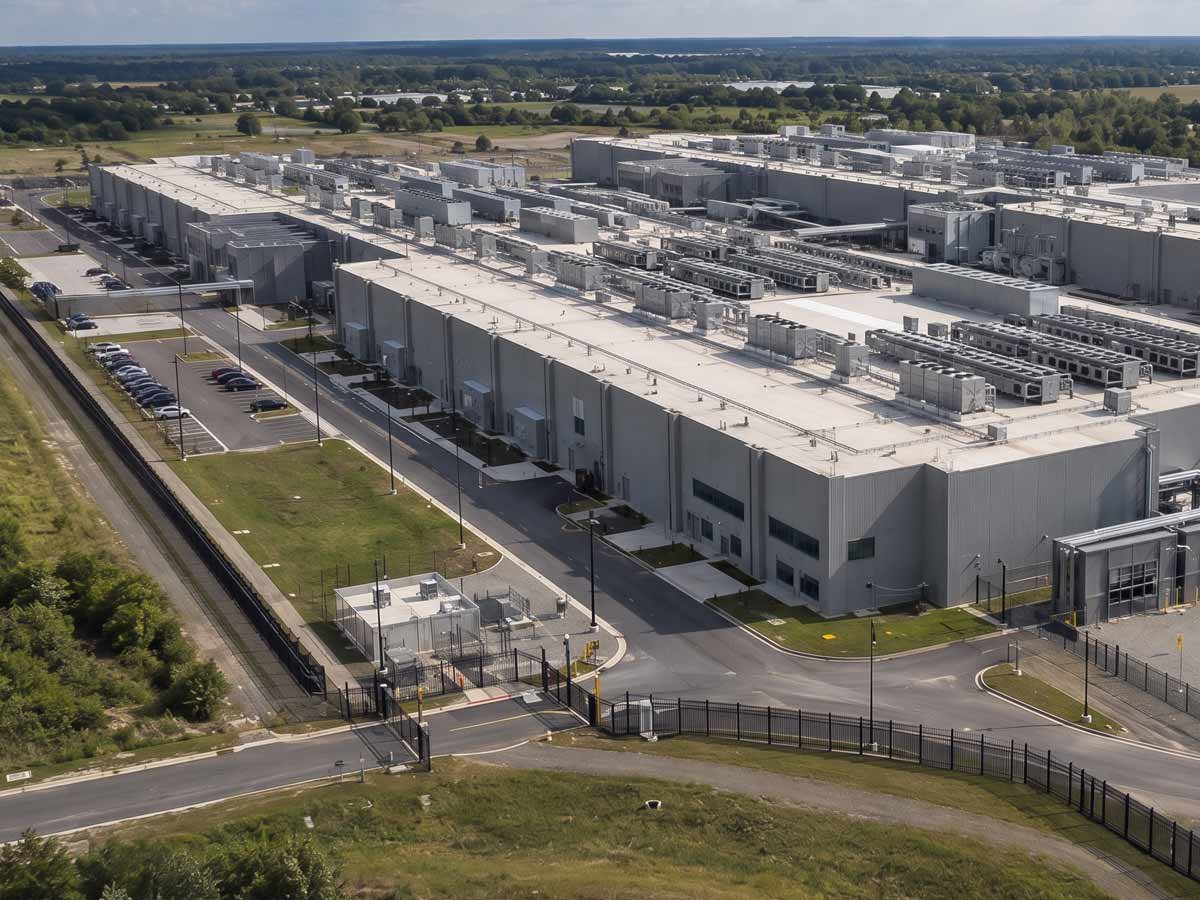





Most commercial properties already run some form of physical perimeter security. A fence around the lot, a gate at the entrance, cameras over the parking area, a motion light at the loading dock. Far fewer run a program that stops an intrusion. Most only record one after it happens.
That distinction is the whole subject of this guide. The equipment on your boundary is only as useful as what happens in the seconds after it detects something.
What is perimeter security?
Perimeter security is a layered system of physical deterrents, detection technology, and monitored response that protects a property’s outermost boundary. Its job is to identify and intercept unauthorized access before a threat reaches the building, people, and assets inside.
Perimeter protection is the first line of defense for any commercial site. It can cover a single fence line or an entire campus, and it usually combines several technologies rather than a single device. Good programs run as a workflow: detect an event, verify it, then respond.
Is perimeter security the same as physical security?
No. Physical security is the whole program that protects a property, from the boundary inward, including access control, alarms, and visitor management. Perimeter security is the outermost layer of that program. It works on the boundary itself, before anyone reaches a door. Access control then determines who may pass through gates, vehicle points, and doors.
| How they compare | Perimeter security | Interior security |
|---|---|---|
| Focus | The outer boundary of the property | Spaces and doors inside the building |
| Typical tools | Fencing, gates, perimeter cameras, sensors, boundary access control | Card readers, door alarms, visitor management, in-building video |
| Question it answers | Can an unauthorized person reach the building? | Who can enter which areas once inside? |
-
Focus
Perimeter security
The outer boundary of the property
Interior security
Spaces and doors inside the building
-
Typical tools
Perimeter security
Fencing, gates, perimeter cameras, sensors, boundary access control
Interior security
Card readers, door alarms, visitor management, in-building video
-
Question it answers
Perimeter security
Can an unauthorized person reach the building?
Interior security
Who can enter which areas once inside?
What are the five Ds of perimeter security?
Perimeter security is usually framed around five functions known as the five Ds. They are deter, detect, deny, delay, and defend. Each names a job the boundary must do, and a program is only as strong as its weakest link. On many commercial sites, the weakest is the last.
Deter
Deterrence lowers the odds that anyone will test the boundaries. Visible fencing, gates, lighting, signage, and cameras tell an intruder the site is watched and hard to enter. Someone weighing an easy target against a hard one usually picks the easy target.
Detect
Detection identifies a breach the moment it happens. Perimeter security devices such as sensors, cameras, and intrusion detection systems register when someone crosses the line or approaches a restricted zone. Detection only has value when the alert reaches someone who can act on it. A sensor that logs an event no one sees does nothing to stop it.
Deny
Denial physically blocks or slows unauthorized entry, and it is central to perimeter protection. Barriers, bollards, locked gates, and reinforced fencing keep people and vehicles out. Deterrence shapes an intruder's decision to try, and denial is what stops them if they do. On sites facing vehicle-borne risk, such as utility yards and logistics hubs, denial carries real weight.
Delay
Delay buys time. Layered barriers, secondary fencing, and hardened entry points slow an intruder down long enough for a response to arrive. The value of delay is measured against response time. Every extra minute an intruder needs is a minute your security team or local law enforcement has to intervene before a loss occurs.
Defend
Defense is the active response to a confirmed threat. It covers live monitoring, human intervention, two-way audio, and coordination with law enforcement. Defense is the layer that turns a detection into an outcome. Many commercial sites stop at detection and leave the response layer to chance.
What are the main types of perimeter security systems?
The main types of perimeter security systems are physical barriers and fencing, perimeter detection sensors, perimeter cameras and CCTV, perimeter lighting, perimeter access control, and perimeter intrusion detection systems (PIDS).
Physical barriers and fencing
Fencing, gates, bollards, and barriers form the physical edge of a site and are the oldest form of perimeter fence security. These perimeter barriers deter casual intruders and slow determined ones. On their own, they detect and report nothing. A cut fence line or a scaled gate goes unnoticed until someone walks the perimeter or reviews footage later.
Perimeter detection sensors
Microwave, infrared, fiber-optic, and ground-based perimeter security sensors detect movement or contact along a boundary. These perimeter detection systems extend coverage beyond camera range and work in full darkness. Their weakness is false alarms. Without trained monitoring to verify what triggered a sensor, staff either chase every alert or start ignoring them.
Perimeter cameras and CCTV
Perimeter security cameras record activity along the boundary and let teams see what happened. Newer perimeter CCTV adds analytics that flag movement in restricted zones. Without live monitoring, a camera only records the intrusion for review after the loss. Stopping it in the moment takes someone watching the feed.
Perimeter lighting
Lighting strengthens every other layer. Well-lit boundaries discourage intruders, sharpen camera images, and remove the cover that darkness provides. On its own, lighting improves the odds without changing the outcome. It has to work alongside detection and response.
Perimeter access control
Perimeter access control manages who enters through gates and vehicle points, using credentials, codes, or license-plate recognition. It governs authorized entry well. It does nothing about the parts of the perimeter people are not supposed to use at all, such as a back fence or an unmonitored side yard.
Perimeter intrusion detection system (PIDS)
A perimeter intrusion detection system, or PIDS, integrates sensors, cameras, and analytics into one platform, often with AI that tells a person apart from an animal or blowing debris. A good PIDS cuts false alarms and centralizes perimeter monitoring. It still hands off at the critical moment, because someone has to receive the verified alert and act on it.
| System type | What it does | Limit without monitored response |
|---|---|---|
| Physical barriers and fencing | Deter and slow intruders at the boundary | No detection or alert; a breach goes unnoticed |
| Perimeter detection sensors | Sense movement or contact along the line | False alarms overwhelm staff or get ignored |
| Perimeter cameras and CCTV | Record and flag activity on the boundary | Footage documents an intrusion after the fact |
| Perimeter lighting | Deter and improve camera image quality | Improves the odds but does not stop entry |
| Perimeter access control | Manage entry at gates and vehicle points | Ignores areas no one is meant to enter |
| Perimeter intrusion detection system | Integrate sensors, cameras, and AI classification | Still needs a person to act on the alert |
-
Physical barriers and fencing
What it does
Deter and slow intruders at the boundary
Limit without monitored response
No detection or alert; a breach goes unnoticed
-
Perimeter detection sensors
What it does
Sense movement or contact along the line
Limit without monitored response
False alarms overwhelm staff or get ignored
-
Perimeter cameras and CCTV
What it does
Record and flag activity on the boundary
Limit without monitored response
Footage documents an intrusion after the fact
-
Perimeter lighting
What it does
Deter and improve camera image quality
Limit without monitored response
Improves the odds but does not stop entry
-
Perimeter access control
What it does
Manage entry at gates and vehicle points
Limit without monitored response
Ignores areas no one is meant to enter
-
Perimeter intrusion detection system
What it does
Integrate sensors, cameras, and AI classification
Limit without monitored response
Still needs a person to act on the alert
Where commercial perimeter security matters most
Commercial perimeter security systems matter most on construction sites, in commercial real estate, at industrial and logistics facilities, and around critical infrastructure like utilities and data centers.
Construction sites
Construction sites hold high-value equipment, copper, tools, and fuel on an open footprint with no permanent security infrastructure. The layout changes week to week as the build moves, so fixed coverage rarely keeps up. Temporary fencing and a few cameras seldom stop after-hours theft when no one is watching the jobsite. The cost includes the stolen asset and the schedule slip while the site waits on a replacement.
Commercial real estate
Office and mixed-use properties must balance perimeter security with open, welcoming access for tenants and visitors. Parking structures, loading docks, and after-hours entrances are the usual weak points. The U.S. Bureau of Justice Statistics reported that property crime in urban homes rose from 176.1 to 192.3 per 1,000 households between 2022 and 2023.
Industrial and logistics facilities
Warehouses, distribution centers, and logistics yards have large perimeters, heavy vehicle traffic, and moving inventory. Theft here is organized and rising. A 2025 CNBC investigation found cargo theft at record levels, with estimated annual losses at about $1 billion or more and criminal networks increasingly targeting freight in transit and at rest. A perimeter this size cannot be covered by one guard or a handful of fixed cameras, and the gaps are where those operations work.
Utility and critical infrastructure
Substations, water facilities, and telecom sites are often unmanned and remote, and they are targeted for copper and metal theft as well as sabotage. These sites usually sit far from a security office or responding officer. Detection at a remote site means little without a monitored response that can verify a threat and dispatch help fast. Limited power and connectivity also rule out many conventional systems, which is why self-powered, remotely monitored units fit these locations. Data centers also encounter critical infrastructure threats, so they need multiple detection and response methods to identify and stop intruders at the property line and protect the assets inside.
Why detection without response leaves you exposed
Every system above can detect an intrusion. Few can respond to one. That gap between a detection event and a security outcome is where most perimeter programs fail.
Two examples show the pattern. A perimeter camera captures a clear recording of someone climbing a fence at 2 a.m. If no one is watching the feed, that recording is evidence for a police report. It does nothing to stop the break-in as it happens. A perimeter sensor fires an alert that lands on a dashboard no one checks until the morning shift. By then the intruder is gone, and so is whatever they came for.
False alarms make the gap worse. A boundary that raises false alarms ten times a night trains staff to ignore the eleventh alert, which may be the real one. Verification is what keeps a perimeter alarm worth trusting.
| Scenario | Detection only | Detection plus response |
|---|---|---|
| Fence breach at 2 a.m. | Recorded for a later police report | Verified live and acted on within seconds |
| Sensor alert after hours | Sits on a dashboard until morning | Reviewed by an agent who confirms the threat |
| Confirmed intruder on site | Reviewed after the loss | Two-way audio warning and law enforcement dispatch |
-
Fence breach at 2 a.m.
Detection only
Recorded for a later police report
Detection plus response
Verified live and acted on within seconds
-
Sensor alert after hours
Detection only
Sits on a dashboard until morning
Detection plus response
Reviewed by an agent who confirms the threat
-
Confirmed intruder on site
Detection only
Reviewed after the loss
Detection plus response
Two-way audio warning and law enforcement dispatch
Monitored response changes outcomes. When a trained agent reviews a flagged event, confirms the threat, and acts within seconds, the same cameras and sensors become part of an active defense.
What to ask before choosing a perimeter security provider
The right perimeter security provider is accountable for the outcome, not just the equipment on the fence line. Before you sign, get clear answers to a few questions.
- Who watches the alerts, and when? Confirm monitoring is live around the clock, not queued until the next morning.
- What happens in the first minute after a verified threat? Ask for the exact steps, from alert to law enforcement dispatch.
- Who owns the perimeter security system after installation? One provider for design, installation, monitoring, and maintenance means one call when something needs attention.
- Will it work with the cameras you already have? Integrating existing hardware avoids a full rip-and-replace.
- Can it cover remote or temporary sites? Ask about self-powered, deployable units for locations without permanent power or connectivity.
How managed perimeter monitoring closes the gap
Managed perimeter monitoring adds the response layer that hardware cannot provide on its own. It provides perimeter guarding without someone standing in person at the fence. Trained agents watch AI-flagged events as they happen, confirm whether an alert is a real threat, and act on it in real time. That action might be two-way audio that warns an intruder they have been seen, a call to on-site staff, or coordination with local law enforcement when an intrusion is confirmed.
The model also changes accountability. A traditional setup splits a perimeter across vendors, so the company that sold the cameras, the one that installed them, and the one that monitors them are three different phone numbers when something needs support. A managed provider is paid to keep the system working, so its incentives line up with your uptime.
Kastle delivers managed perimeter security. Kastle VideoGuarding pairs AI-assisted detection with live monitoring agents and an average 30-second video operations center response, so a flagged event reaches a person who can act on it. For sites without permanent infrastructure, Kastle’s outdoor surveillance and video (OSV) line, including deployable Mobile Sentry and Solar Sentry units, brings monitored perimeter surveillance to construction sites, remote yards, and temporary locations. Existing cameras can often connect to the platform for monitoring and analytics without a full rip-and-replace.
One provider designs, installs, monitors, and maintains the system, so there is no gap between the team that installs the cameras and the team that watches them. The same monitored model scales from one site to a portfolio, including remote perimeter monitoring for unmanned locations. Kastle has protected commercial and multifamily properties this way for more than 50 years, securing more than 60,000 businesses across the United States and Australia. For a security director or facility manager comparing perimeter security solutions, that means one call and one owner for the entire boundary.
Frequently asked questions
Perimeter security guards a property’s outer boundary using a combination of physical deterrents, detection technology, and monitored response. Its goal is to stop unauthorized access before a threat reaches the building, people, and assets inside. A complete perimeter program detects intrusions and responds in real time.
The five Ds are deter, detect, deny, delay, and defend. Together, they describe the jobs a perimeter has to do, from discouraging an intrusion to actively responding once one is confirmed. Many commercial sites handle the first four and leave defense, the response layer, to chance.
No. Physical security is the full program that protects a property, including interior access control and in-building systems. Perimeter security is the outermost layer of that program, focused on the boundary before anyone reaches the building.
A perimeter intrusion detection system, or PIDS, integrates sensors, cameras, and analytics into a single platform that flags a boundary breach. Many use AI classification to separate real threats from animals or weather and reduce false alarms. A PIDS detects reliably, but it still depends on a monitored response to turn an alert into action.
Access control manages authorized entry, deciding who can pass through a specific gate or door with a credential. Perimeter security protects the entire boundary, including areas no one should enter. Access control is one part of a perimeter program, and the two work together.
Tell us about your project and our team will follow up.